Asset Forfeiture
Frequently Asked Questions
The Asset Forfeiture Unit (AFU) was created to enable the unlawful proceeds of all serious crimes and terrorist acts to be identified, traced, frozen, seized and eventually confiscated.
In criminal law based forfeiture, the State seizes property after obtaining a conviction, as part of the accused’s sentence or upon a separate application. When applying for the seizure of assets, the AFU, is required to prove a direct link between the assets in question and the alleged criminality.
In cases involving civil forfeiture, a criminal charge or conviction is not needed. The State only needs to show by a preponderance of the evidence that the property was used to facilitate a crime or is tainted property or terrorist property
All the money that is seized by the AFU is deposited into the Recovered Asset Fund at the Reserve Bank of Zimbabwe. Any other property that is seized by the AFU such as vehicles, houses, land etc is lodged with the Asset Management Unit.
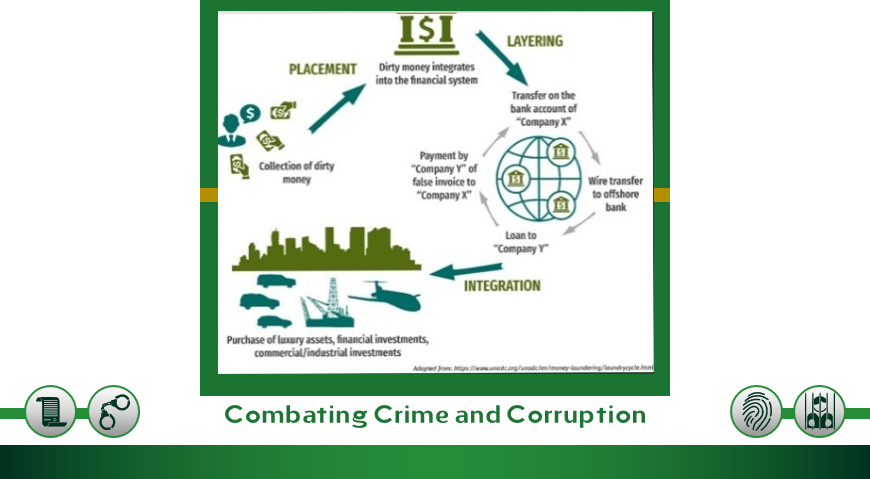
Money laundering is the illegal process of making large amounts of money amassed or generated through criminal conduct, such as drug trafficking or terrorist funding, appear to have come from a legitimate source. The money from the criminal activity is considered to be dirty money, and the process “launders” it to make it look clean/legitimate.
The AFU provides mutual legal assistance to foreign states seeking the tracing, identification, freezing and confiscation of property under the Money Laundering Act and foreign anti-money-laundering laws.
The AFU is also responsible for instituting legal action to identify, seize and effectively recover property that is considered to be the instrumentalities or proceeds of crime under any law other than the Money Laundering and Proceeds of Crime Act.
Asset forfeiture Unit Overview
Collaboration and Cooperation
The AFU works closely with various Government Agencies, including the:
-Zimbabwe Republic Police
-Zimbabwe Anti-Corruption Commission
-Zimbabwe Revenue Authority
-Financial Intelligence Unit of the Reserve Bank of Zimbabwe
-Other relevant supervisory, regulatory, and investigative authorities
This collaboration enables the AFU to effectively trace, identify, recover, seize, or confiscate proceeds of crime.
International Cooperation
-Facilitating mutual legal assistance requests
-Processing extradition requests
-Combating terrorism and prosecuting related offences
-Tracing, identifying, recovering, seizing, or confiscating proceeds of crime related to offences committed in Zimbabwe or elsewhere
Key Functions
The AFU’s primary functions include:
-Asset Identification and Tracing: Identifying and tracking assets that are believed to be derived from criminal activity.
-Asset Seizure and Confiscation: Obtaining court orders to seize and confiscate assets that are linked to criminal proceeds.
-International Cooperation: Collaborating with foreign agencies to recover assets that have been transferred across borders.
-Anti-Terrorism: Assisting in the investigation and prosecution of terrorism-related offences.
By effectively targeting the financial resources of criminals, the AFU contributes to the prevention and deterrence of crime, while also recovering assets that can be used for public benefit.